How Women Are Rewriting the Rules of the French Culinary Scene
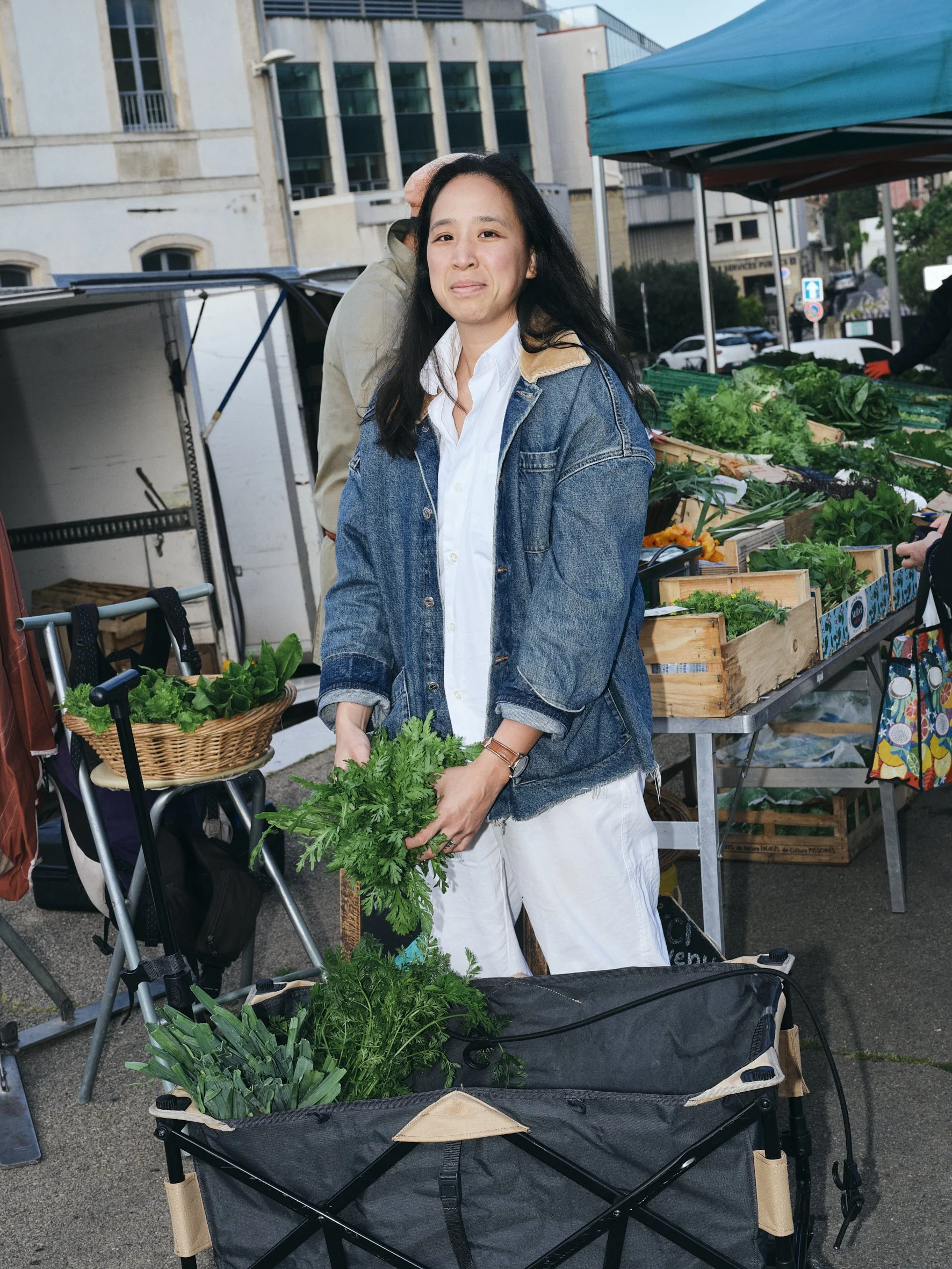
Céline Pham, chef of Inari in Arles.
How Women Are Rewriting the Rules of the French Culinary Scene
By Anna Prudhomme
It is a sunny day in Marseille, France, when I meet Mina Kandé, a 32-year-old chef who has recently opened her first restaurant named Le Consolat. The space feels warm and intimate, with dark wooden wall panels, a row of ochre-painted fans, and soft pink fabric lamps with subtly Japan inspired shapes. In the kitchen, Kandé develops a deeply mixed-heritage cuisine, rooted in seasonal products sourced from the surrounding region and shaped by Asian influences, particularly from East Asia. Whether it’s a bold reinterpretation of the traditional French moules-frites—mussels sautéed in a wok with a yuxiang sauce, lifted by lemon, chili, and mint—or crispy fried rolls filled with eggplant, shiitake, and confit tofu, the approach remains the same.“Here, we try to work with beautiful ingredients, carefully sourced and patiently transformed through sauces, fermentations, and precise techniques,” explains the young chef.
Speaking with Kandé, one immediately senses her passion and commitment. As well as her rare capacity to envision stronger, fairer structures for cuisine and restaurant cultureSet against the persistent weight of patriarchal structures that continue to shape French culinary culture, women face profound inequalities within professional kitchens. Although they make up a significant share of kitchen assistants and operational staff, only a small fraction reach positions of real authority. In France, women account for just 17% of head chefs, and only around 5% of starred kitchens are directed by female chefs. These alarming numbers are clear symptoms of a system that continues to reward visibility, power, and prestige along overwhelmingly masculine lines.
Yet a new generation of female chefs is quietly RESHAPING the French culinary landscape. Figures such as Anne-Sophie Pic, Hélène Darroze or the younger Julia Sedefdjian have carved out visible, uncompromising paths at the highest levels of gastronomy.
Yet a new generation of female chefs is quietly reshaping the French culinary landscape. Figures such as Anne-Sophie Pic, Hélène Darroze or the younger Julia Sedefdjian have carved out visible, uncompromising paths at the highest levels of gastronomy. Alongside them, initiatives dedicated to amplifying emerging female talent and the growing adoption of more flexible schedules and humane management models are slowly transforming kitchen culture. Often driven by women entrepreneurs, these eco-conscious and hybrid restaurants are opening new possibilities, offering a long-term rethinking of how restaurants can be run, sustained, and imagined.
Entering the Kitchen: Inheritance, Chance, and Transmission
These chefs are not simply trying to create spaces within an existing ecosystem, they are actively reshaping its very architecture. Yet, beyond the long-standing fantasy of an all-consuming vocation, cooking was not for all a childhood dream. More often, it emerges as a more diffuse inheritance, shaped by memories of family kitchens, by travel and displacement, by roots, exile, and forms of métissage [mixture of different cuisines traditions].
For Céline Pham, the independent and outspoken chef, named among Vanity Fair’s 50 Most Influential French People in the World, her love for cuisine is rooted in family history. Her mother, expelled from Vietnam, filled notebooks with French recipes written in Vietnamese as a way of adapting, while working her entire life as a cashier and constantly cooking at home. “As a child, I didn’t eat at the school cafeteria. It made me very food-driven, and curious about taste,” explains the chef, before adding about her mother’s cooking: “It was also that feeling of being uprooted, of wanting to recover the flavors of one’s country, something comforting, something reassuring.” It’s only much later that Pham recognizes the echo of this past in her present life.
Pham entered cooking at 21. She created private dinners for fashion houses such as Schiaparelli and Chanel. Today she advocates for a more just cuisine, openly combating gender-based violence within professional kitchens. In 2022, she anchored this approach by purchasing and opening her first restaurant, Inari, in Arles
If women’s place in gastronomy is still far from self-evident, patriarchy has long ensured that their relationship to cooking in the domestic sphere is. For Kandé, cooking first existed as an affectionate feminine language. She grew up primarily with her mother and grandmother, both of whom cooked a lot at home. Her mother worked in the restaurant industry for nearly a decade, including in the kitchen of her best friend’s Vietnamese restaurant, immersing Kande early on in the backstage rhythms of hospitality. But for the young chef, inspiration also emerged through travel and métissage. She went to China for two years to study Mandarin, and worked as an au pair for a family who introduced her to an intense restaurant culture—eating out three times a day and traveling frequently across the country. “Sometimes we would travel to different regions just to eat local specialties. That’s when it truly became a passion for me!”
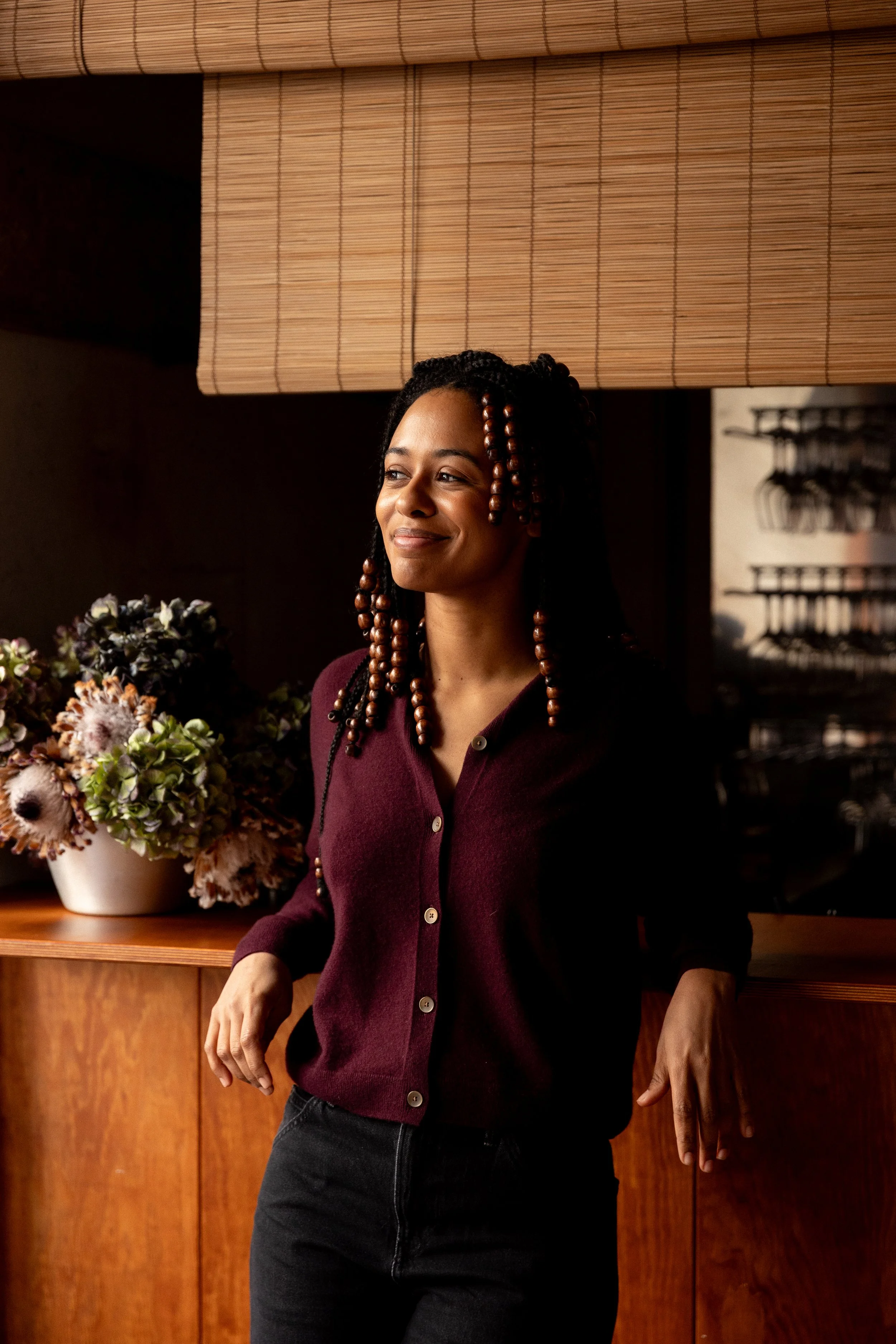
Mina Kandé, Chef at Le Consolat. Photography by Anthony Louet.
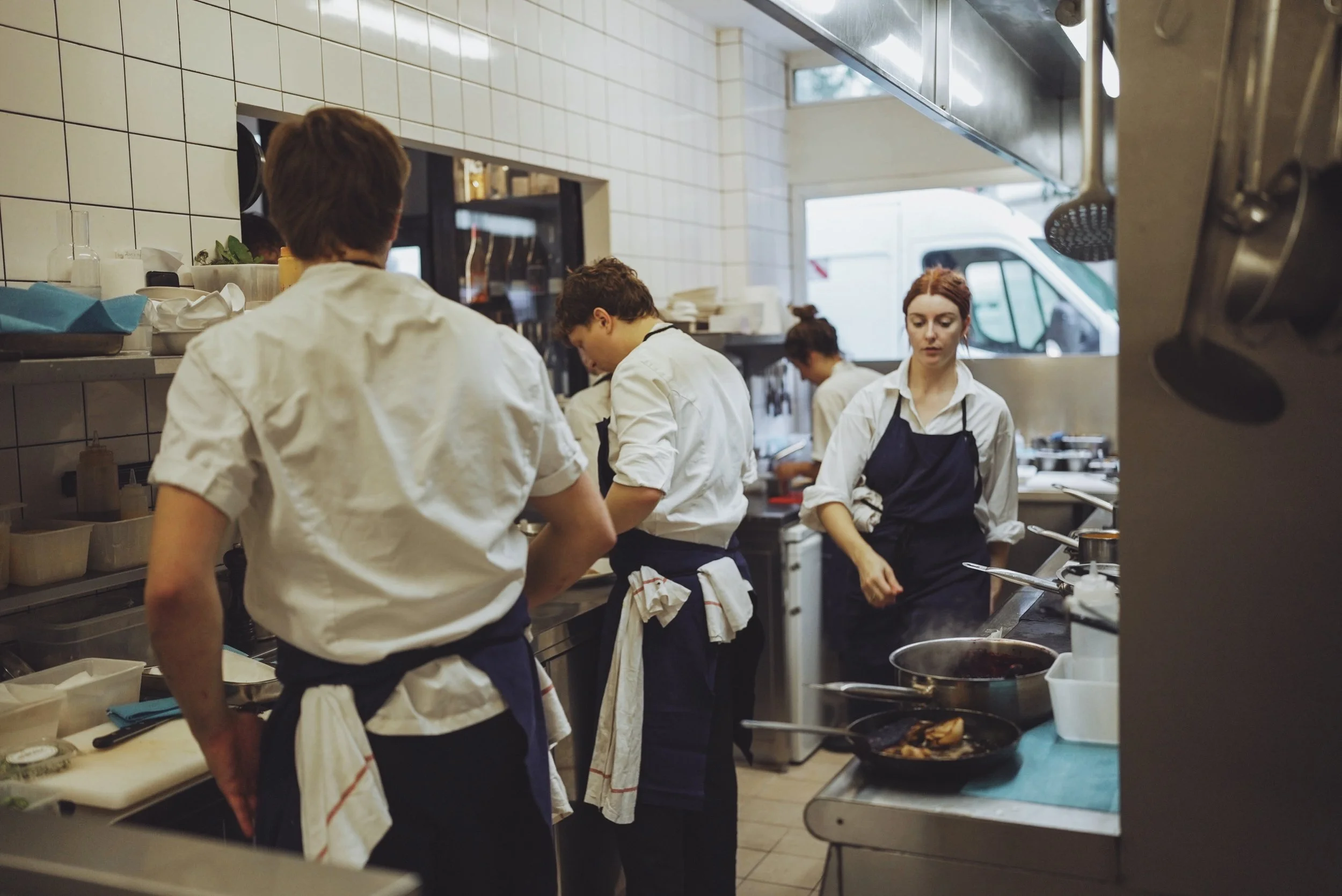
In Le Servan’s kitchen, Tatiana and Katia Levha’s restaurant.
At Culinary School : the Illusion of Equality
In Paris, the sisters Tatiana and Katia Levha form a complementary and closely bound duo at the helm of two addresses that have reshaped the contemporary bistro landscape. The elder, Tatiana Levha— born in Manila—is a chef. She trained at the Paris-based Grégoire-Ferrandi school, a prestigious culinary school founded in 1920 and often referred to as the Harvard of gastronomy, before going on to work in some of the capital’s most demanding kitchens. Katia Levha, the younger sister, born in Paris, is a dining room director and sommelier. Trained at Glion Institute in Switzerland and at the five-star hotel the Mandarin Oriental in London, she develops natural wine lists attentive to gender parity among winemakers. Together, they opened Le Servan in 2014, followed by Double Dragon in 2018. Across both restaurants, the sisters employ nearly thirty people representing fourteen nationalities, cultivating a strong sense of family within their teams.
“When I was in culinary school, there weren’t many women, and very few continued afterward,” recalls Tatiana Levha, before adding that attrition affected everyone, regardless of gender. The gender gap became even more striking upon entering the professional world, particularly within large teams. Tatiana Levha recalls, “We felt like we were always being tested.” In the kitchens of luxury hotels, the atmosphere felt overwhelmingly masculine. “It was very testosterone-driven. I didn’t stay long,” she explains. Her sister Katia Levha echoes this experience from the front of the house. While women were numerous in hotels, certain positions remained clearly out of reach. “I experienced it very quickly: [we would receive the] same training, same level, but not the same opportunities.”
In Pham’s case, the challenge was not access, but endurance. She attended Ferrandi, five years after Tatiana Levha, in 2010: “Contrary to what people often imagine, there were many women at school, numerically, even a majority,” she recalls from her time. But very few stayed in the profession afterward. “Today, there may be only two of us women who are still actually working in professional kitchens.” Her account complicates the narrative of scarcity. The issue is not initial representation, but attrition. “It’s really during restaurant placements that things change: the further you go in the program, the more internships you complete, the more problematic behaviors you encounter…and the fewer women remain.”
“It’s really during restaurant placements that things CHANGE: the further you go in the program, the more internships you complete, the more problematic behaviors you encounter…and the fewer women remain.”
Like Levah and Pham before her, Kandé enrolled at Ferrandi in 2015 for a two-year bachelor’s program. For her, gender and racial imbalance were impossible to ignore. “There were very few women, and even fewer racialized women. Out of a class of around eighty students, there were only two Black women.” Diversity was nearly absent, and the atmosphere was often hostile. “I faced constant mockery, especially about my hair.” Sexism and racism, she notes, were palpable both among the teaching staff and in the broader environment. “It was very ‘old school’,” she concludes. “I truly hope things have changed since then.”
Placed side by side, these accounts reveal how culinary institutions reproduce hierarchy long before positions of leadership are assigned. Gender limits authority; race compounds isolation; and endurance in suffering becomes the condition for legitimacy.
Inside the Kitchen: the Best and the Worst
The culinary world is a highly specific environment. Long hours—eight to nine a day, sometimes twelve—are spent in closed spaces with few breaks, entirely structured around service. Colleagues are often seen more than family or friends, which can create a powerful sense of enclosure. This intensity seems to act as a catalyst for both the best and the worst. Harmful practices can take hold easily if left unchecked, which is why vigilance must be collective. A restaurant is never built or sustained by one person alone; it functions as part of a much wider chain, shaped not only by those who work within it, but also by economic pressures, societal realities, and the broader context in which it exists.
For Pham, the first step into professional kitchens came through an apprenticeship in a large, high-volume bistro. “There were 100 covers, I learned volume, gestures, speed. Everything was timed with stopwatches,” she recalls. Sexist remarks began to surface gradually. She had already sensed crude jokes, and everyday racism at school, but in the workplace those signals grew louder. “Before culinary school, I had worked with a chef who was incredibly open. Someone I really admired. We talked about culture, we took our time. After school, it was the complete opposite and it was hard to adjust.”
In larger brigades, the violence became explicit. “I faced psychological pressure, physical contact, and a sexual assault,” she says. The impact was devastating. “I was convinced I wanted to do this job, but I wasn’t aligned with the world I was evolving in.” She became increasingly selective about where she worked, yet struggled to articulate what she was going through. “I didn’t know how to verbalize my weaknesses or my fragility. It worked against me.” Anxiety set in. “As soon as I was given responsibility, I would fall apart. I was anxious, stressed, and I had nosebleeds. It came from words I couldn’t say, from limits I didn’t set. And it stayed with me for a long time.”
In 2015, she chose to work alone. Residencies and events followed, gradually gaining momentum. “I found clients myself, did private dinners, brand projects. It started small.” Being alone was both a risk and a revelation. But quickly, Pham was able to formalize her activity, moving from self employment to running a company, gaining confidence in contracts, accounting, and occasional recruitment. Life accelerated and accelerated…until it didn’t.
Covid brought everything to a halt. “I had a severe case and spent a few days in the hospital. That’s when I realized I had to take care of my health. I hadn’t been listening.” A quiet residency in Camargue followed, changing everything. “That’s when I discovered the city of Arles.” That summer, alongside major projects, she also met Agathe, who would become her wife and the mother of their six-month-old son.
For Kandé, much of her learning came from observing what did not sit right with her, whether it was working conditions, authority, hierarchy, or recognition. Over time, she came to understand that her work was, above all, for herself. “I never felt like I was working for a boss. Each experience was a personal choice, a way of building my own practice.” Her first significant professional experience was under chef Éric Trochon, between the restaurants Le Freddy’s and Le Semilla in Saint-Germain-des-Prés. At Le Semilla, she encountered bistronomy at its peak: product excellence, simplicity, rigor, and also a full economic transparency with the entire team. “We knew the daily turnover,” she recalls, “and that created a real collective dynamic.” The owners were present, valued the work, and offered raises. “It’s the only place where I experienced such fair and humane management.” The impact was lasting and deeply shaped her vision of work.
Equally decisive were the role models she encountered along the way. Seeing women owners actively present in the kitchen made a profound difference. She happened to work at Double Dragon, run by sisters Tatiana and Katia Levha. “Seeing two racialized sisters, mothers, deeply present in their restaurants, was such a powerful model,” Kandé says. “Tatiana was sending out plates at eight months pregnant. It was impressive! »
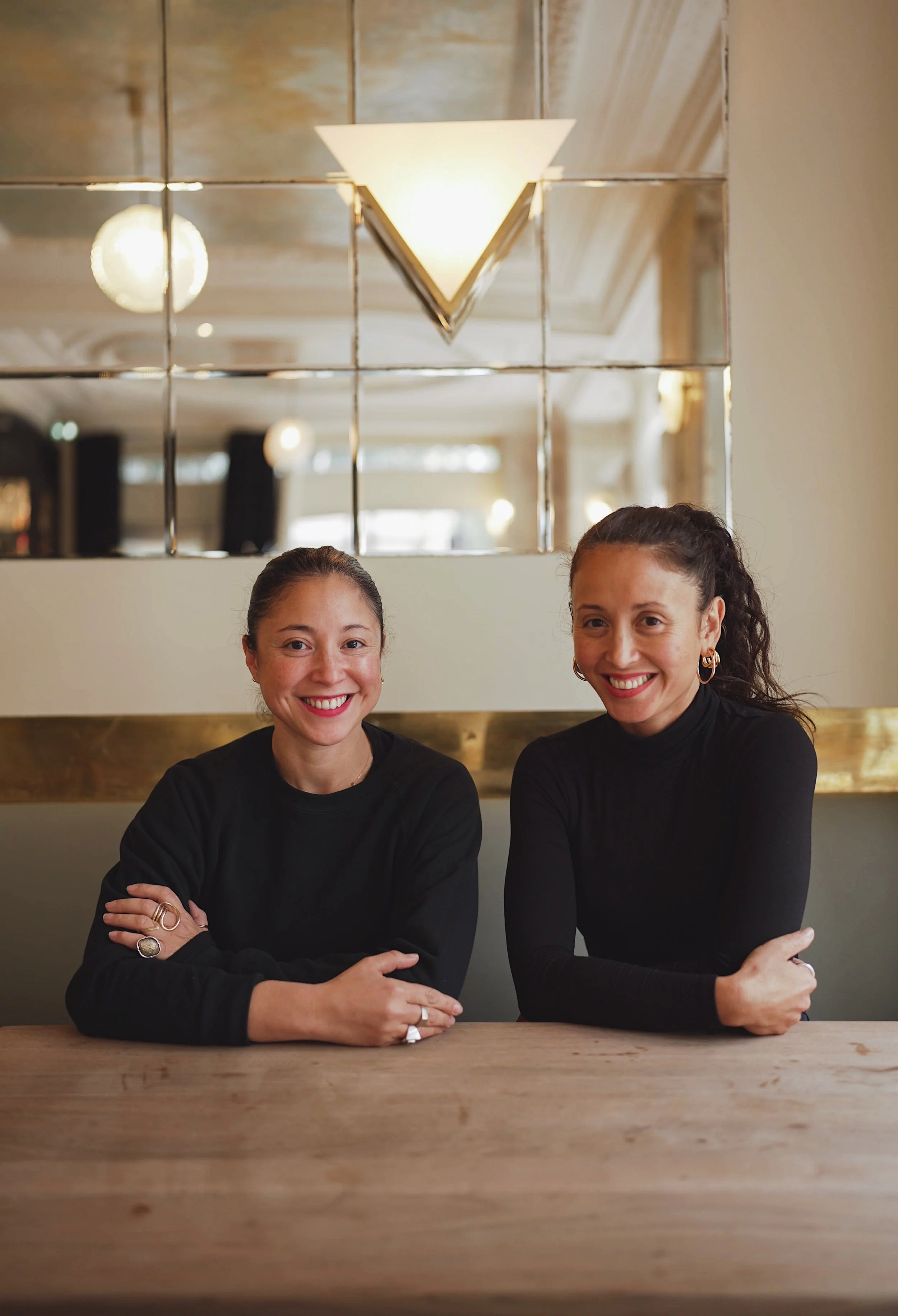
Tatiana Levha, Chef at Le Servan & Double Dragon and Katia Levha Dining room director and sommelier at Le Servan & Double Dragon.
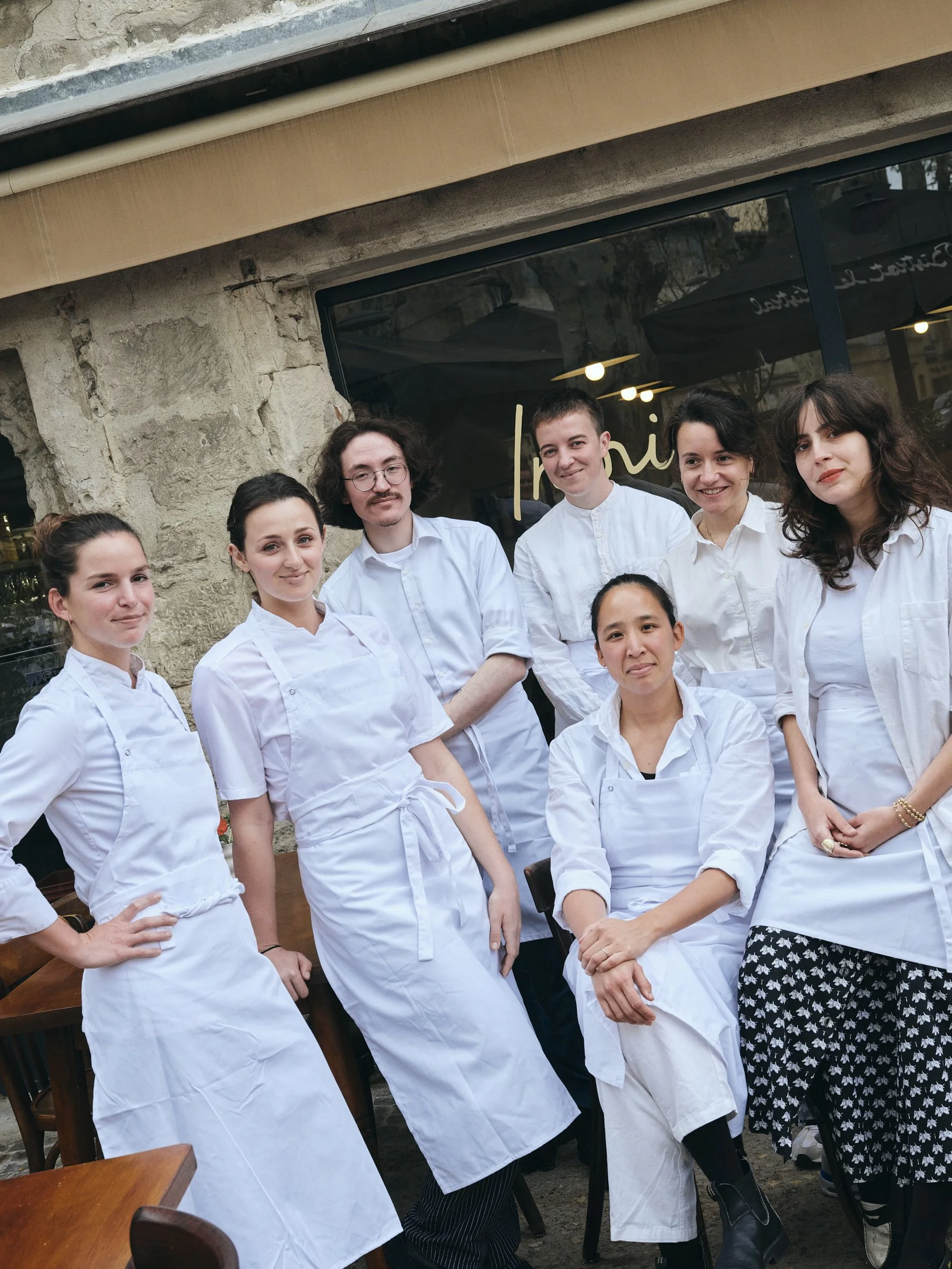
The team at Inari, Arles with chef Céline Pham.
Opening Their Own Places, Building a Model from Within
Long before it became a restaurant, working together was already a teenage dream for Tatiana and Katia Levha. When Katia Levha returned from working in London, things fell into place almost instinctively. From the outset, the identity of the restaurant was shaped in a very sincere way. “The place grew out of our conversations, our tastes.” Rather than following an existing model, they constantly returned to a simple question: “What do we like when we go out to eat?” Their intention was to create a joyful space: one grounded in values, with kind service and delicious food. “There was this idea of sustainability, and of accessibility, especially in terms of price.” Sustainability, they insist, extended far beyond ecology. “It was ethical, economic, and also about time. We didn’t want to create something ephemeral, but a refuge. A place people could come back to.”
Over the years, the model of course evolved. “We’ve reinvented ourselves several times to improve working conditions,” they say. This included introducing a four-day workweek, which required expanding the team and increasing opening days to make the system viable. “We made decisions so that no one would be indispensable, in order to sustain the model.” With many women working across their restaurants, their ambition to create a safe and inclusive workplace has become one of their proudest achievements. A proof that values, care, and longevity can coexist within the demanding reality of hospitality.
“We’ve REINVENTED ourselves several times to improve working conditions. We made decisions so that no one would be indispensable, in order to sustain the model.”
For Pham, opening her own restaurant was first and foremost about a gut feeling. Having built up some capital through events and private work, she wasn’t actively looking to open a restaurant when she came across the incredible space in which is now located Inari: a 13th-century chapel. “It was an absolute love at first sight.”
She approached banks without a business plan, armed with little more than press clippings and a résumé. “The banker actually encouraged me. I got the loan easily and I was very surprised.” The opening was incremental and precariously; in the early months, the restaurant was barely breaking even. Launching Inari also meant returning to management responsibilities she had long avoided. “I wanted to make sure I didn’t reproduce what had hurt me,” she explains. “But in trying too hard to smooth things over, I forgot myself a little bit.” Old traumas began to resurface. Fear and anger turned inward, creating a loss of confidence. “It took me almost the first two years to find some stability.” The restaurant’s winter closure became a crucial tool, allowing time for distance, administrative work, and restructuring.
The balance for Pham rests on collaboration and trust. She has worked alongside her wife since day one, with her overseeing the dining room. “She creates a welcoming atmosphere and pays attention to small gestures, like offering coloring books to families.” says Pham. “It’s an equilibrium, between personal life and work.” In the kitchen, she delegates to her head chef. They even spent two months traveling in Asia together, to deepen a shared understanding of Pham’s cuisine and roots. “For me, that’s positive, horizontal management, based on trust and emotional sharing as much as professional skill.”
An hour from Arles, in Marseille, Kandé’s restaurant Le Consolat is conceived as a space where sustainable processes can be built and other ways of working imagined. “I wanted a place for the long term: a storefront, a home, a laboratory,” she explains. From the outset, the organization of the kitchen reflected this vision. “We are two women head chefs here. I refuse the idea of a single figure at the top.” For Kandé, a restaurant must allow for relays, rest, travel, and a life beyond service. Profitability, she insists, cannot be reduced to revenue alone. “It’s not just about making money, but about collectively improving our quality of life and well-being.” Her ideal is simple yet radical: “Being able to leave for several months, come back, and still have your place in the team.” A philosophy that contributes to creativity itself. “Creation requires emptiness. You can’t create without pauses, without feeding your imagination elsewhere.”
In practice, this translates into a deeply collective way of working. “The menu is designed by the two of us (Kandé and chef Wen Wen), but it evolves through the entire team: the dining room, customer feedback, even the dishwasher ». Each dish is observed, discussed, and adjusted. Six months after opening, Kandé sees this beginning as a moment to dream. “To imagine a free, creative, desirable house. One where you can work for a long time without burning out. That’s the vision guiding the entire project.”
What these women are creating is not simply a new form of “female-led cuisine,” but an entirely new way of imagining and running, a restaurant and a kitchen. This generation stands out for its refusal of all-powerful figures and lone-authority models. Instead, they favor collective dynamics, shared responsibility, and workplaces designed to last. The personal and the professional are no longer kept strictly apart; they overlap, support one another, and shape how these places function day to day. Their restaurants are imagined as refuges rather than machines. Spaces where people can work, grow, return, and remain. Sustainability is a foundation: human, economic, emotional, and ecological. In choosing durability over performance, they are redefining what success in gastronomy can look like.
Everyone is an expert now, and almost no one is. In her latest essay, Bonnie Langedijk asks how confidence came loose from competence, why we believe the ring light over the researcher, and whether real expertise can survive a culture that rewards speed over depth.