The Women of Asics
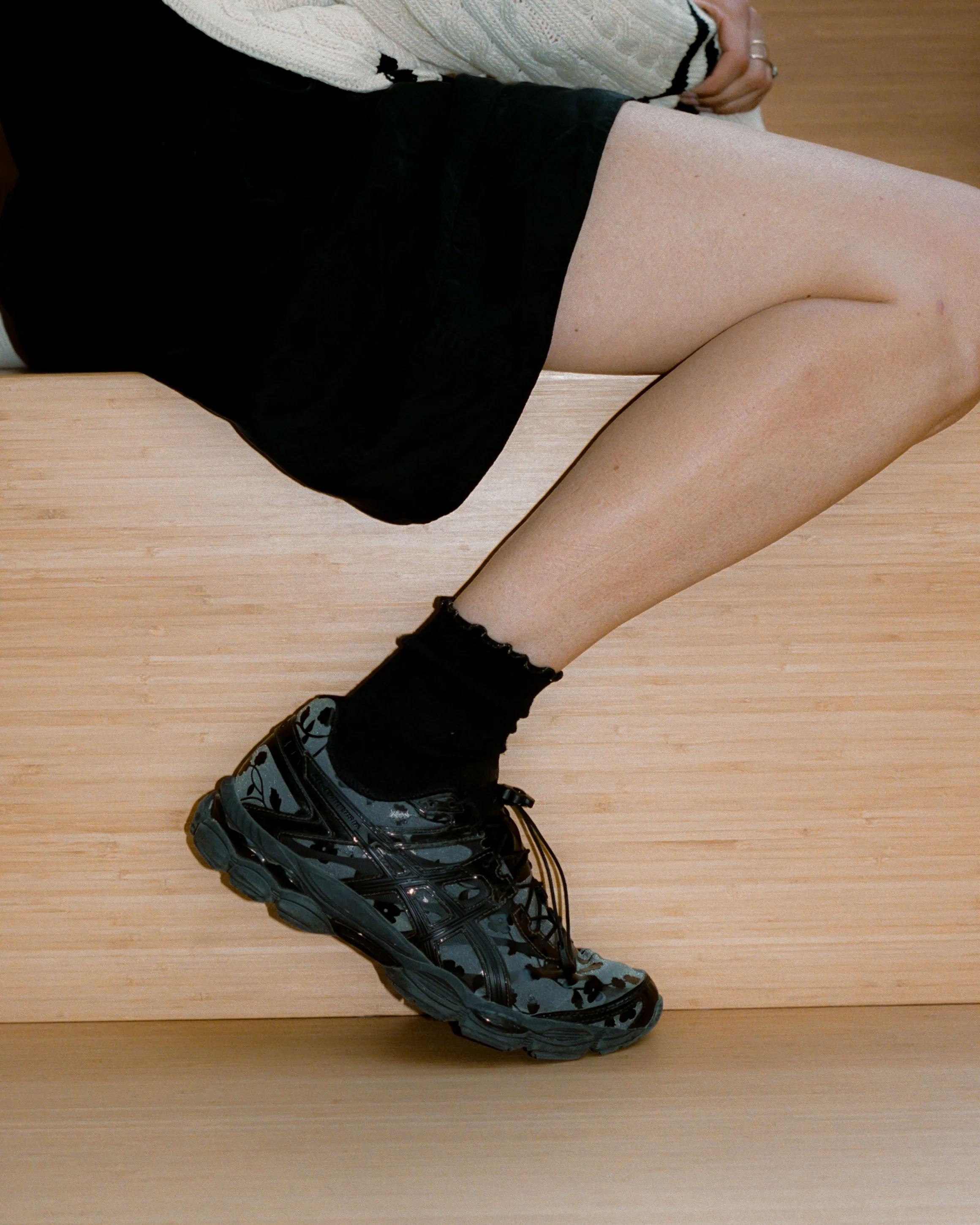
Photography by Cleo Goossens. Courtesy of HURS.
The Women of Asics
Inside the Quiet Revolution of Today's Most Culturally Relevant Sneaker Brand
IN PARTNERSHIP WITH ASICS
By Bonnie Langedijk
Sneakers used to belong to men. They were designed for male athletes, marketed to male collectors, and mythologised by male subcultures. Women were treated as a secondary market, the industry defaulting to "pink it and shrink it" strategies. Today, the women's sneaker market is growing five times faster than men's, yet most brands continue to miss the mark with their approach to female consumers. ASICS has taken a fundamentally different path. From their Amsterdam office, a female-led design team has made women not just a target audience, but the centre of the design philosophy itself. Rather than feminizing sneakers, the team reimagines what a sneaker can be—worn by anyone, anywhere at any time.
And it’s resonating. ASICS has just claimed the title of fastest-growing brand on StockX for the second consecutive year. And in Europe and worldwide, the brand’s momentum across both performance lifestyle categories is undeniable. But if hype has carried other sneaker brands, ASICS has risen to the top by resisting it entirely.
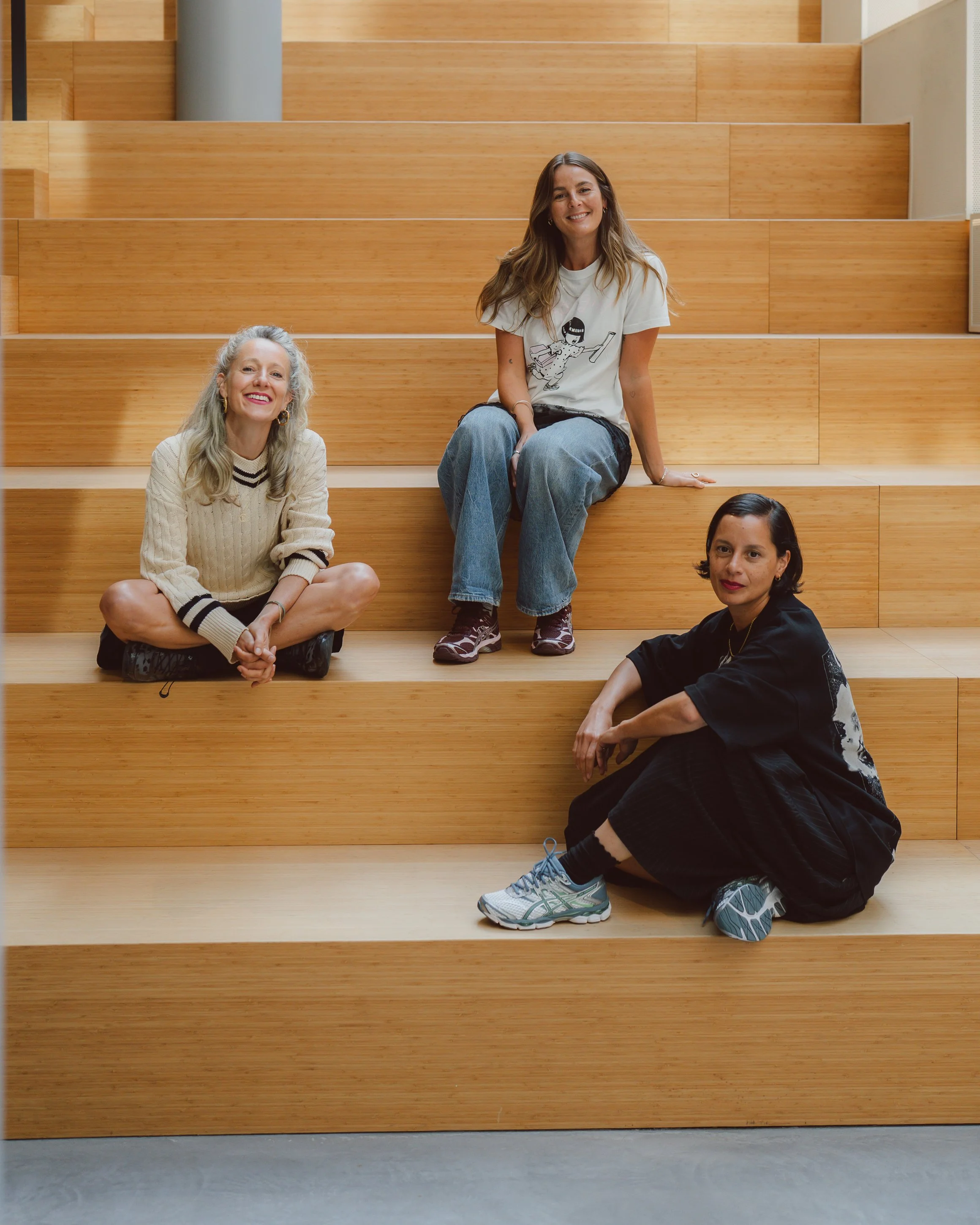
The ASICS team, left to right: Lisa Kuijper, Senior Footwear Designer, Maisie Reid, Product Marketing Specialist and Arlette Schreurs, Senior Product Manager. Photography by Cleo Goossens. Courtesy of HURS.
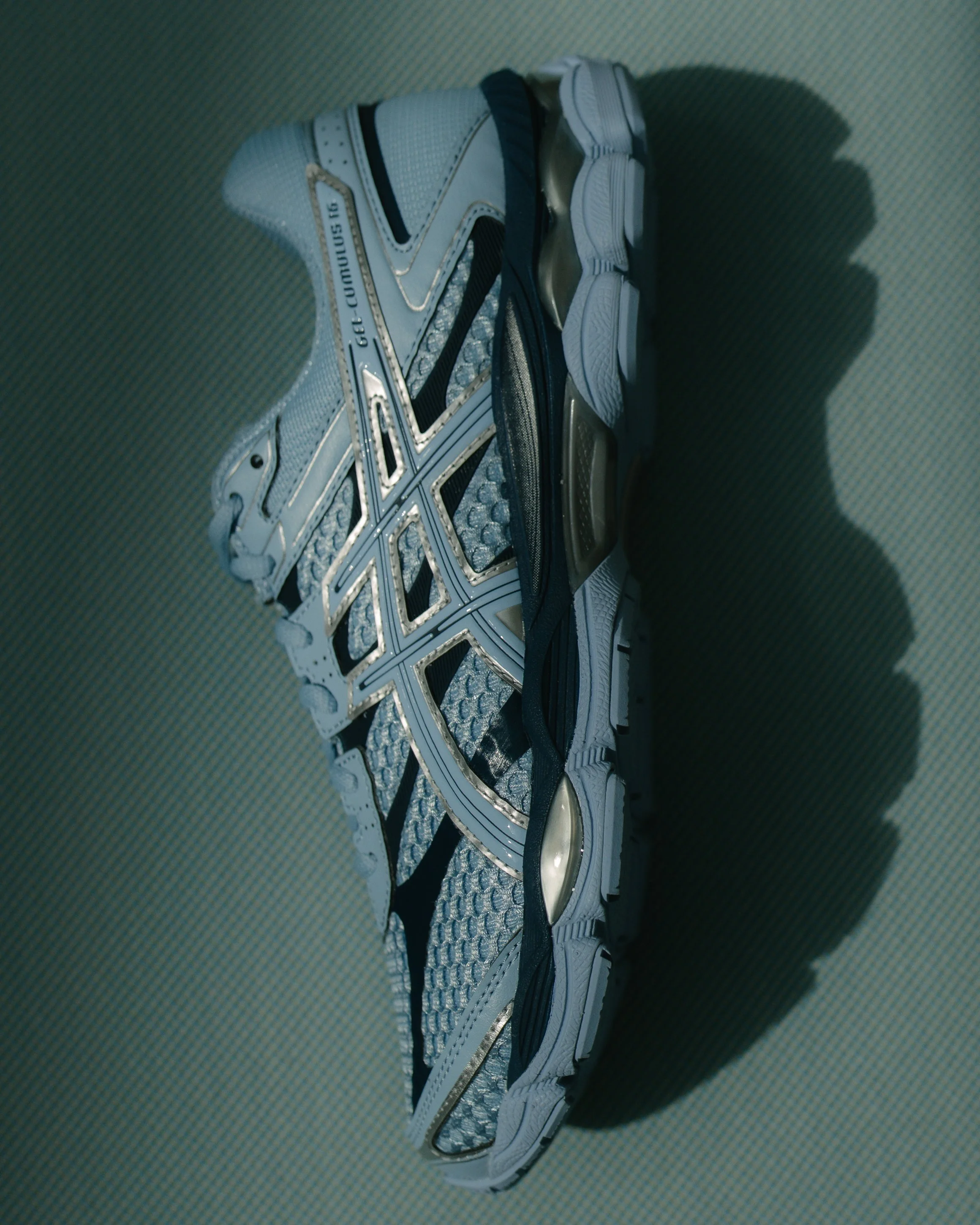
The GEL-CUMULUS™ 16. Photography by Cleo Goossens. Courtesy of HURS.
The Philosophy That Started It All
Unlike its peers, ASICS begins with a philosophy. When Kihachiro Onitsuka founded the company in post-war Japan, 1949, it was with a radical proposition: physical movement could transform mental wellbeing. From the Latin phrase "Anima Sana in Corpore Sano"—a sound mind in a sound body—came not just a brand name, but a foundational ethos that continues to guide every decision made within ASICS' walls.
"The company was started with the intention to bring positivity to the youth in Japan through sports," explains Arlette Schreurs, Senior Product Manager who has spent 18 years with ASICS, including two formative years in Tokyo. "He was remarkably ahead of his time in understanding that when you move, your mind transforms for the better. This isn't merely a marketing message for us—it's our brand's authentic ethos, something we experience within the walls of ASICS and strive to bring to our consumers."
This Japanese heritage manifests in subtle but profound ways throughout the organization. The concept of "kaizen"—continuous improvement—permeates their approach to product development. Rather than chasing trends or rushing to market, ASICS maintains what Schreurs describes as "an almost obsessive focus on technology, comfort, and making things better."
The cultural influence extends to their workplace dynamics as well. Lisa Kuijper, Senior Footwear Designer with 14 years at the company, reflects on her visits to Japan: "The level of respect they have for one another is extraordinary. It's become one of my favorite aspects of working at ASICS. When you demonstrate respect for each other, you naturally approach the products you're creating with that same level of care and consideration."
The Women Shaping the Brand
The Amsterdam office houses an unusual concentration of experience and perspective. Arlette Schreurs leads the design team with a background that bridges development and design—a rare combination in an industry where most professionals specialize in one area or the other. "When I first read the job description at ASICS, I remember thinking, 'This is exactly who I am,'" she recalls. "I actually pursued a headhunter to secure the interview."
Lisa Kuijper brings meticulous attention to color and materials, supporting all design and prototype work on collaborative projects. Her approach is refreshingly consumer-centric: "My primary focus is always: who is our consumer? When we engage with collaborators, I immerse myself completely in understanding who they are, what they represent and what drives their vision."
Maisie Reid, Product Marketing Specialist, joined during a pivotal moment in 2019 when ASICS SportStyle was being established as a distinct entity. "I arrived at an exciting moment because I was there as they built the foundation from the beginning," she explains. "Previously, it existed as ASICS Tiger and ASICS lifestyle under different structures—my timing gave me the opportunity to be part of the complete rebranding evolution."
What unites these three women is a shared commitment to authenticity and a deep skepticism of trend-chasing. As Reid notes: "The market is saturated with options. The greatest challenge currently is that everyone is attempting everything. Our focus remains on staying true to our ASICS DNA and ensuring we don't compromise our authenticity by pursuing fleeting trends. We possess such rich history and an extraordinary archive—why would we abandon that foundation to chase what everyone else is doing?"
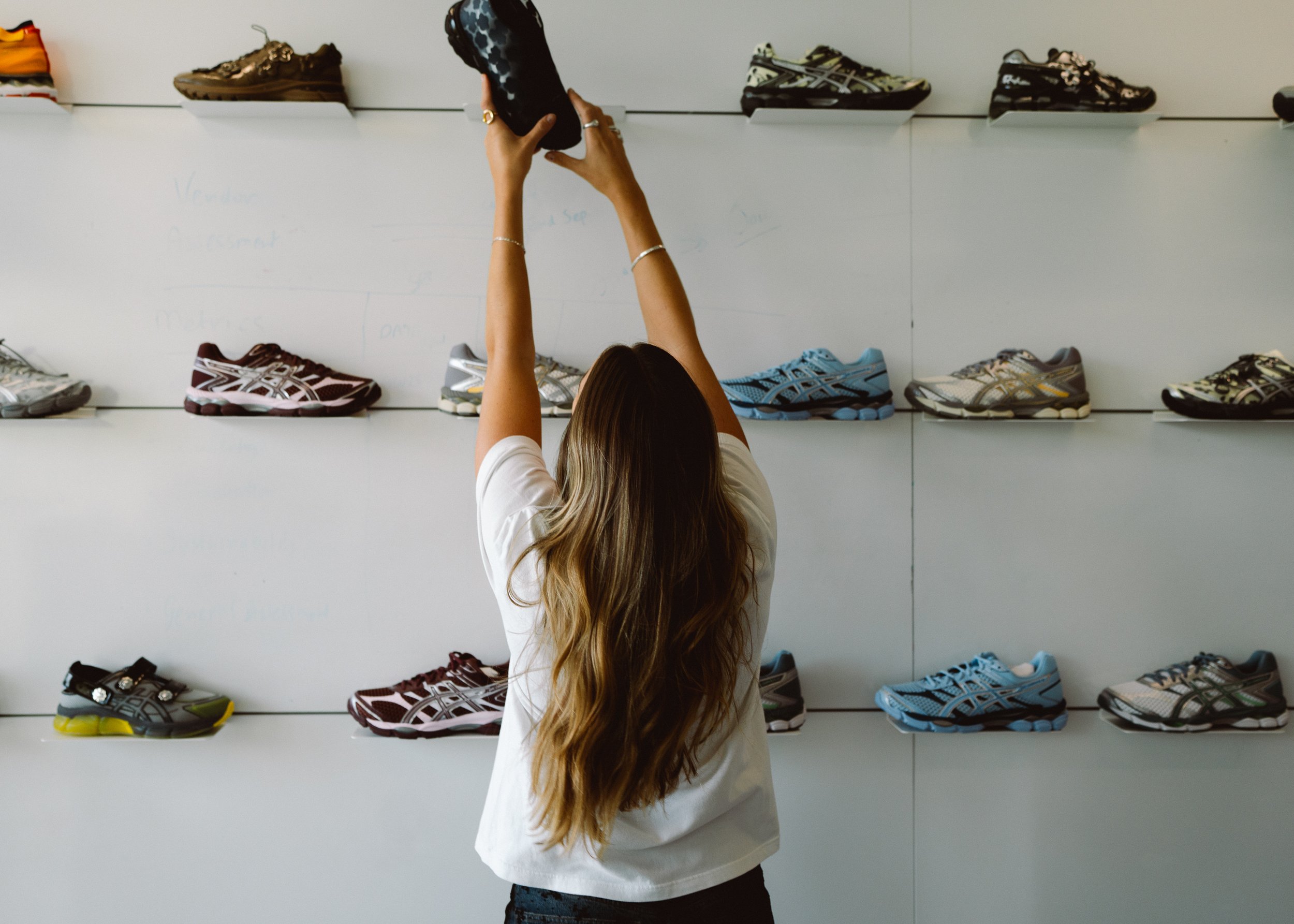
Maisie Reid with the GEL-CUMULUS™ 16 SSCB. Photography by Cleo Goossens. Courtesy of HURS.

Maisie Reid, Product Marketing Specialist, at the ASICS office. Photography by Cleo Goossens. Courtesy of HURS.
Evolution Over Revolution: The ASICS Methodology
Walk through ASICS' design process, and you'll discover a methodical, almost nerdy approach that prioritizes substance. Every product, whether destined for elite athletes or lifestyle consumers, undergoes the same rigorous testing at their Institute of Sports Science in Japan. Even lifestyle shoes receive the same scrutiny as performance running gear. It’s a costly and time-intensive process that most fashion brands would consider excessive.
"Even our recent lifestyle launches undergo specific testing for walking rather than running, because the biomechanics differ significantly—different flex points, different comfort requirements," Reid explains. "This ensures everything we create serves a genuine purpose. We're not rapidly producing items to capitalize on trends; we're crafting products that align with our DNA and genuinely serve our consumers."
This commitment to testing occasionally creates tension between creativity and functionality. Kuijper recalls instances where "I designed shoes that were aesthetically beautiful, but they didn't survive our quality standards." Rather than compromise, the team returns to the drawing board.
The collaborative process itself reflects this methodical approach. When working with external partners, the team insists on in-person meetings, often bringing collaborators to Amsterdam or traveling to their studios. "Physical presence around a table proves essential for the design process," Kuijper observes. "It facilitates more natural communication and brainstorming, allowing us to bridge different worlds effectively. This process consistently leaves me feeling inspired—you reach ideas that would be impossible without external perspectives."
Designing for Real Women's Lives
Today, women represent 42% of the lifestyle sneaker market yet remain underserved. Besides the market opportunity, it reflects a fundamental misunderstanding of how women interact with footwear.
"The versatility of our shoes, perhaps more than any other attribute, resonates with our female consumers," Reid explains. "You can wear them casually, to the gym, for errands with friends, or even dress them up with a Cecilie Bahnsen dress to wear to a party. There's no limitation on where our shoes belong. Our team embodies this philosophy—we wear the same shoes to the office, then to evening workouts, weekend cycling, or social events."
Unlike traditional sneaker culture, which often treats shoes as collectibles or statement pieces, ASICS designs for the reality of women who need seamless transitions between contexts. The approach extends to their sizing philosophy as well. "We design from a performance perspective, so functionality always serves as our starting point," Kuijper explains. "We create options for every foot type, and everything is unisex. Our team represents diverse women, and our designs are available across the complete size range—we're not constrained by traditional gender limitations in our thinking."
The Art of Collaboration
ASICS' collaborative philosophy shines through their eclectic roster of partners, spanning from Danish homeware brand HAY, Italian heritage label CP Company to emerging creative voices like Kiko Kostadinov. But it is the partnership with Danish designer Cecilie Bahnsen that best exemplifies ASICS' sophisticated approach to collaboration. Rather than surface-level brand partnerships, these relationships develop into genuine, long-term creative exchanges that push both parties toward new possibilities.
"From the moment I learned we would collaborate with Cecilie Bahnsen, I knew it would yield something extraordinary," Kuijper recalls. "I immediately envisioned what the shoe might become, but the final result exceeded all expectations. It evolved into a beautiful contrast to her more feminine aesthetic. I was genuinely impressed by her willingness to pursue something unexpected, delivering beyond what people might have anticipated."
The latest edition to the ASICS x Cecilie Bahnsen world is the GEL-CUMULUS™ 16 SSCB. It embodies ASICS' commitment to what they call "designing with 'her' in mind." Originally launched in 2014, the shoe returns with updated materials and enhanced cushioning, but its revival is specifically positioned for contemporary women. "This particular model from our 2010s archive felt perfectly suited for this moment," Reid explains. "It's more progressive than our current market offerings—certain details elevate it significantly, while still maintaining the resonance we knew would connect with female consumers. We specifically wanted to reintroduce this model through a female perspective, positioning it explicitly for her."
Bahnsen's approach was both thoughtful and bold: "In designing this shoe, we sought to explore the intersection of femininity and masculinity. We employed softly transparent materials and delicate floral motifs against a robust silhouette, creating contrasts between lustrous and matte finishes, softness and structure, light and shadow," Bahnsen shared.
The collaboration process itself reflects ASICS' emphasis on authentic partnership. "We literally work together," Schreurs explains. "Collaborators visit our office, we dedicate full days to the process, and we engage in pure creativity. We pull inspiration from everywhere—it becomes an exercise in creative discovery."
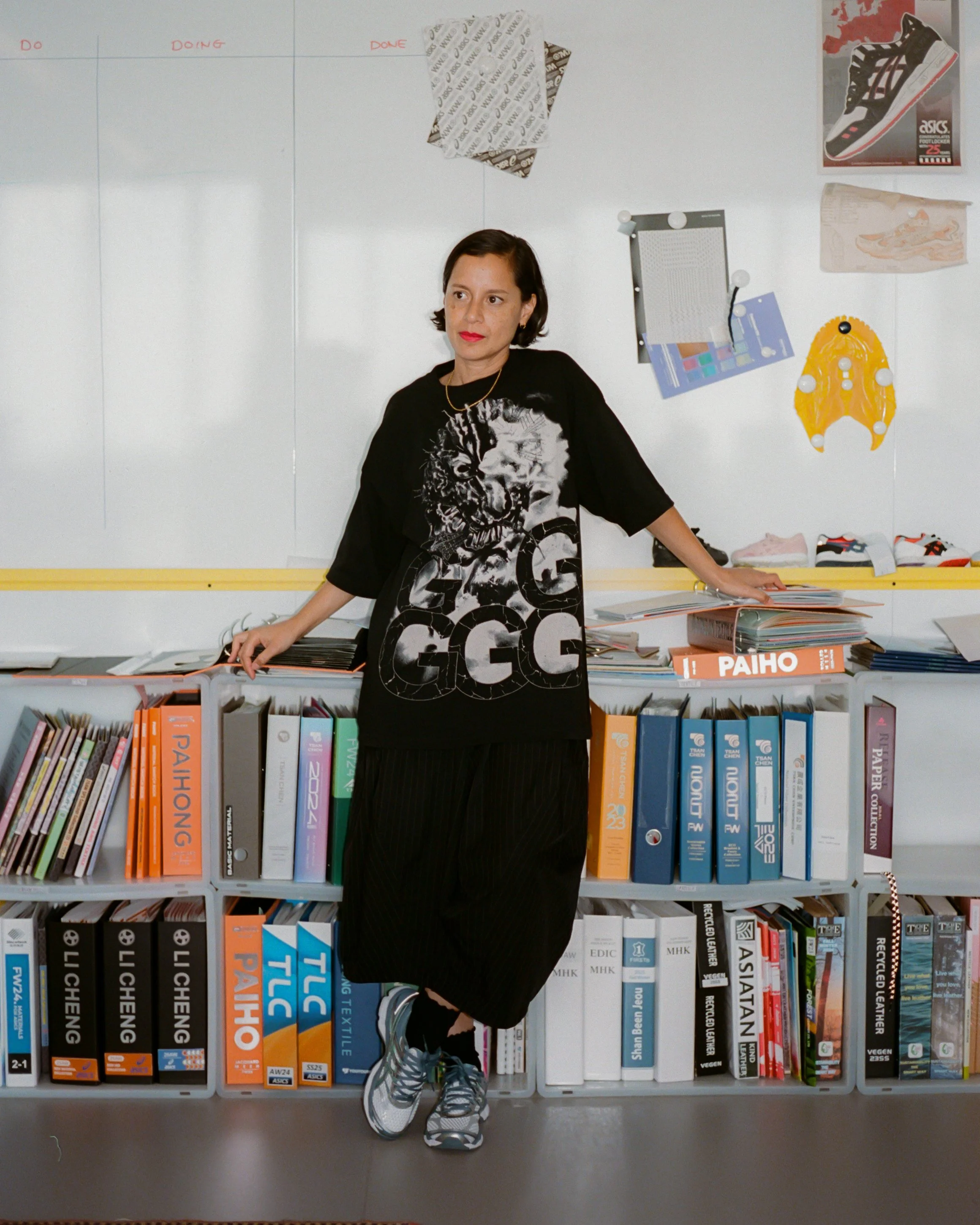
Arlette Schreurs, Senior Product Manager at the ASICS office. Photography by Cleo Goossens. Courtesy of HURS.
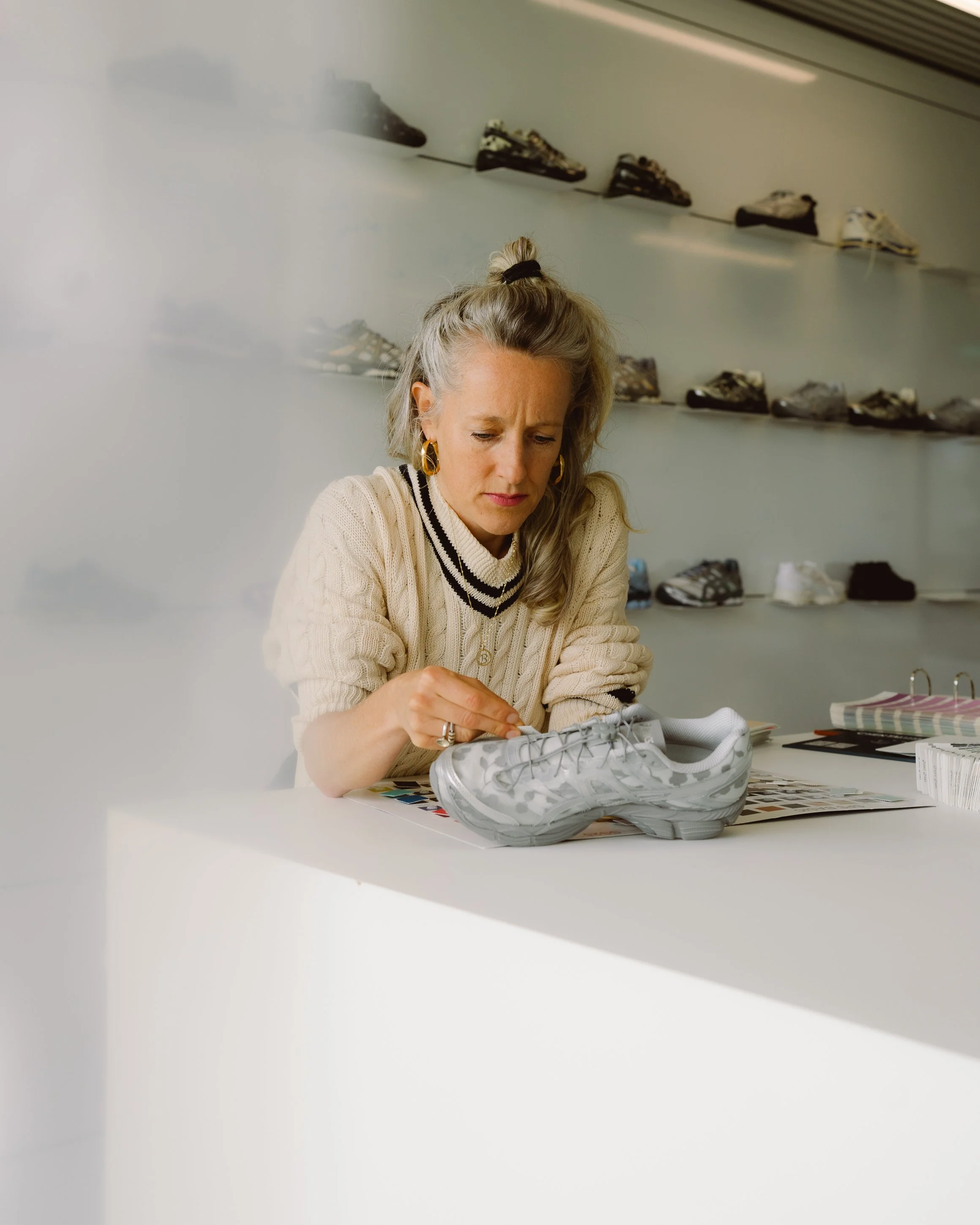
Lisa Kuijper, Senior Footwear Designer, with the Cecilie Bahnsen x ASICS shoe. Photography by Cleo Goossens. Courtesy of HURS.
A Culture of Respect and Results
What emerges from conversations with the ASICS team is a picture of a company that has managed to maintain its foundational values while achieving remarkable commercial success.
"Authenticity serves as our cornerstone," Reid emphasizes. "Our collaboration partners genuinely love our brand. It's remarkable how rare it is to begin a project where people don't demonstrate genuine passion. Usually, when we speak with potential collaborators, they express sincere enthusiasm: 'I love ASICS, I own multiple pairs, this represents a dream partnership.' This authentic connection proves invaluable."They've cultivated a customer base that views ASICS not merely as a shoe company, but as a brand that genuinely prioritizes their wellbeing.
This success has been built on what Schreurs describes as a people-first approach. "Though outsiders might perceive ASICS as a major brand, we remain relatively intimate company-wise," she explains. "Our approach to creation, design, and retail relationships stays quite personal. Even our collaborations feel more like friendships—we share dinners, spend entire days together, and find genuine enjoyment in the process."
The Future of Thoughtful Design
As the sneaker industry continues to evolve, ASICS' approach offers a compelling alternative to hype-driven marketing and trend-chasing. Their commitment to rigorous testing, authentic partnerships, and genuine consumer consideration has created a brand that grows through word-of-mouth rather than artificial scarcity.
"We're essentially compelled to maintain a measured pace because we understand the importance of our testing processes," Reid reflects. "We refuse to release products that don't meet our standards. This represents a consumer-first mentality—we won't introduce anything to the world unless it precisely meets our expectations and fulfills our quality commitments."
This philosophy extends to their vision for the industry's future. Rather than viewing women as a separate market to be conquered, ASICS demonstrates what becomes possible when diverse perspectives are centered in the design process from conception.
"When I observe people wearing shoes I helped develop, it creates a complete circle," Schreurs notes. "Seeing someone genuinely enjoy wearing something you created—that's what makes this work meaningful."
In an industry often driven by noise and spectacle, the women of ASICS are proving that quiet excellence, authentic relationships, and genuine care for consumers represent not just a viable alternative, but perhaps the future of how thoughtful brands should operate. Their success suggests that in a world saturated with options, authenticity and substance will always find their audience.


As art becomes an asset class, gallerists Pilar Corrias, Dominique Lévy and Hannah Traore make the case for the place where its meaning is still decided.